DDFCo/Labs
Coalition for Safety Conference: The Seven Year Itch
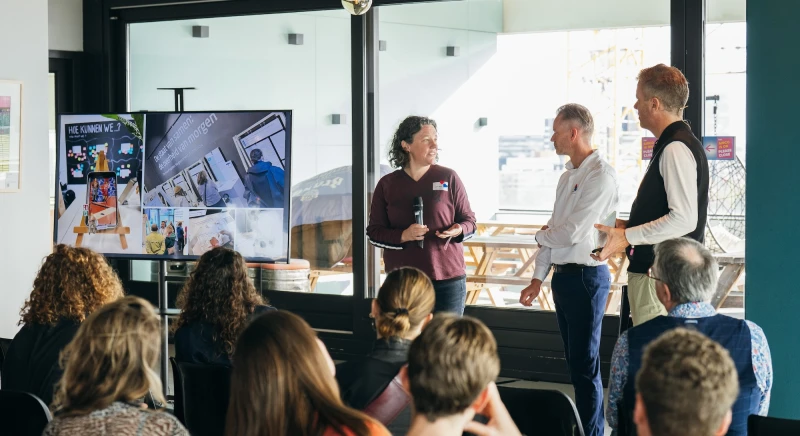
“It's not just about the last mile, but also the first few centimetres.”
For seven years, the Coalition for Safety has been connecting the worlds of the safety and security sector and the design field. At the Coalition's conference during Dutch Design Week, the relationship was assessed: what works, where are the tensions, and how will the next step in the relationship take shape?
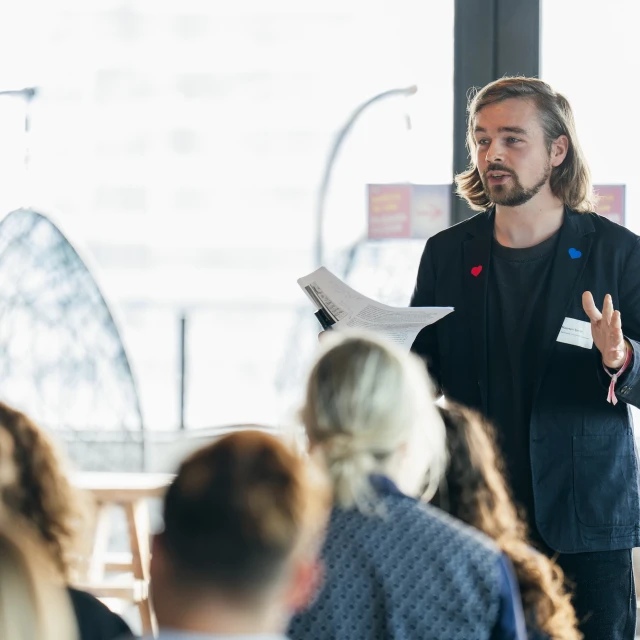
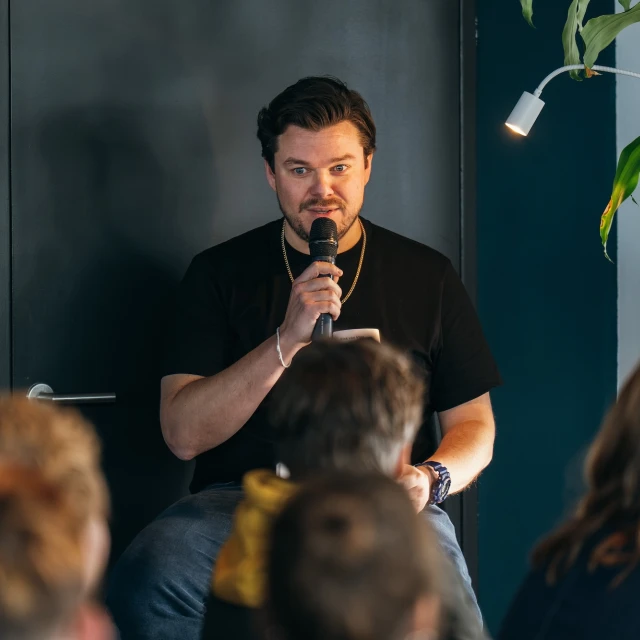
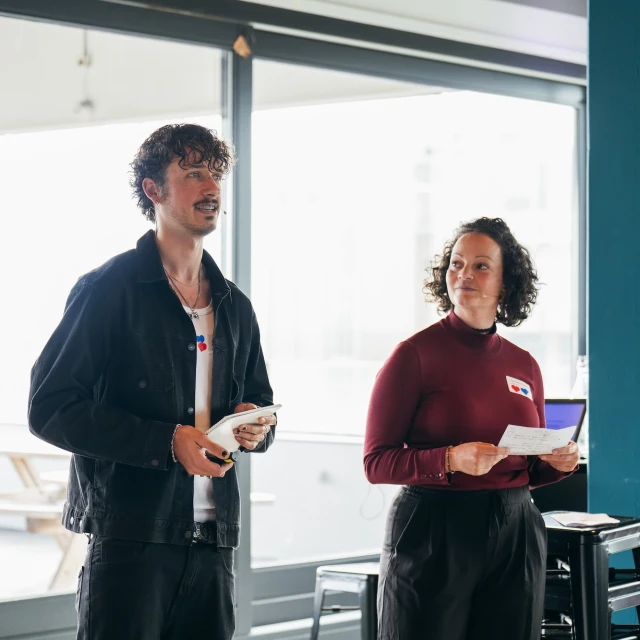
Love and different forms of relationships were the common thread running through the conference. Moderator and social designer Tabo Goudswaard therefore opened the conference at Microlab in Eindhoven with a love letter to the safety and security sector. It was the first in a series of declarations of love read aloud by designers.
The safety and security sector is not always the most romantic partner, Goudswaard admitted in his love letter: you are rigid, tough and sometimes rather gloomy. “Yet you really are the love of my life,” he read aloud. “Together with you, I am searching for positive safety. Not just combating insecurity, but strengthening our ability as a society to deal with tensions and conflicts.”
History is often a blind spot
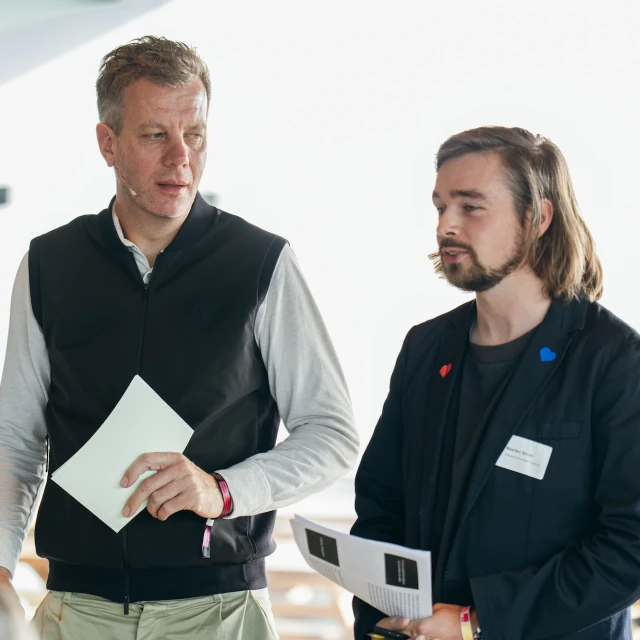
Maarten Smith, a design researcher at the Department of Industrial Design at Eindhoven University of Technology, then spoke about a recent ethnographic study he had conducted. Smith examined the Co/Labs programme (formerly World Design Embassies) of Dutch Design Foundation, of which the Coalition for Safety is part. Over seven years, eighteen partners were involved, more than fifty projects were exhibited, and eleven talk shows and conferences took place, as Smith demonstrated. “Designers not only shape the future, but also make history,” he said. However, according to Smith, their future-oriented perspective means that history is often a blind spot for designers.
Smith explained that he had observed changes in design practices over that period. For example, collaborations increasingly developed into relationships based on trust, whereas previously they had been more transactional. Such relationships of trust also create more room to explore the initial question of a design project together. “If you specify exactly what must be delivered in an assignment beforehand, you ensure that the question itself can no longer be part of the research,” Smith said.
He also discussed how exhibitions are increasingly seen less as the endpoint of a design assignment. “They are increasingly becoming an interim platform from which the conversation can continue.” At the end of his presentation, Smith left the audience with two questions: what have been the concrete effects of your work? And which historical practices are you continuing?
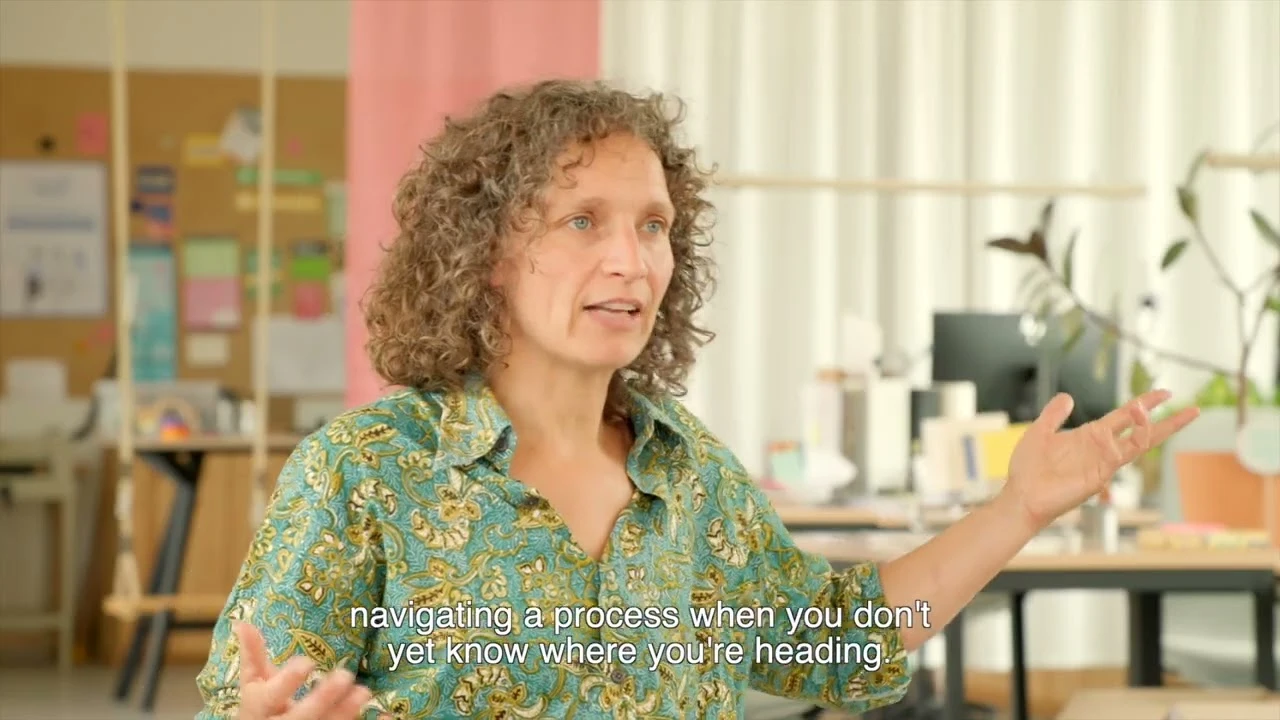
As part of the research, Smith and his colleagues made the documentary Maken in beweging. The documentary shows how design can be used to address societal challenges in fields such as healthcare, construction and safety. How has design played a role in moving complex, entrenched challenges forward? And how can design practice develop further to contribute to innovation centred on societal missions?
France: the first few centimetres
Following Smith’s presentation, Ariane Epstein, Sandrine Pirolles and Tiphaine Vidal from DITP, the French government’s public innovation lab, explained how design in the safety and security sector is organised in France. A design team of five people based in Paris works together with seventeen regional innovation labs. Epstein, Head of Public Design at the national innovation lab, said that she and her colleagues had been inspired by Dutch examples of design projects in the safety and security sector. She cited All Cops Are by Yuri Veerman as an example, in which police officers allowed members of the public to profile them on the street.
During the presentation, Epstein emphasised that close collaboration at a local level is essential in France, even though many design initiatives are initially conceived at a national level. Epstein also said that the design lab aims to think and work across sectors.


The three French designers then discussed the approaches they had used in various design projects, including one addressing violence against women in and around Lyon. “Everything starts with building networks of all kinds of organisations that may be involved in providing support in cases of domestic violence,” Epstein explained. In Lyon, for example, they brought together sixty organisations that support women. A common problem is that support professionals lose contact with victims, Pirolles went on to explain. “People working in healthcare, social work, the police and the justice system often work in isolation from one another. In the worst cases, this can lead to femicide.”
Pirolles explained that they therefore created an ecosystem map of all the professionals in the Lyon region: the woman, her children and her abusive partner are at the centre, with the professionals who have direct contact with her positioned closest to them. Using three detailed personas based on real stories from real women, they mapped out an extensive customer journey to provide a clear overview of when these fictional women come into contact with the professionals around them.
The visualisation also clearly shows that professional help often arrives too late. By that point, the preceding cycle of domestic violence has often already caused considerable harm.
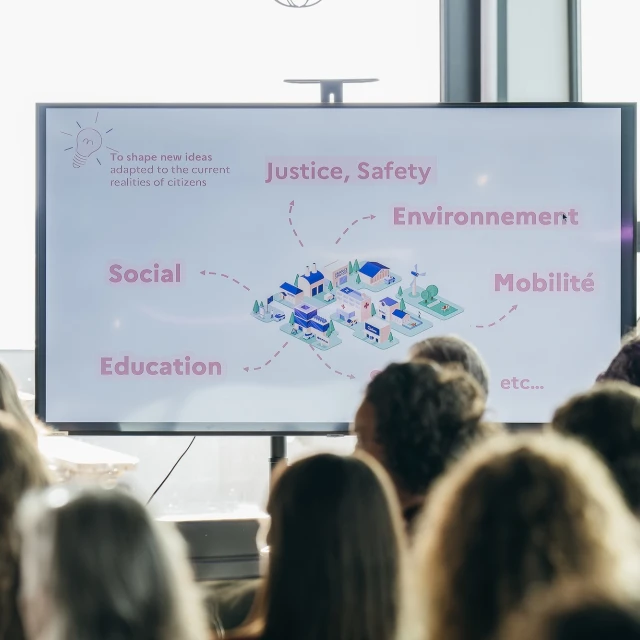

The three also explained how they improved the provision of information at a courthouse in Reims. For many people dealing with the justice system, confusion begins before they even enter the building. They showed an entrance where unclear signage had led many visitors to enter through the wrong door. Following an intervention by the designers, the number of people making this mistake fell by half.
But visitors also encountered considerable confusion inside the building, Vidal explained. One example was the very first question they were typically asked: ‘Are you here for a civil or criminal case?’ “That initial question causes a great deal of panic among people who are often already stressed.”
Furthermore, three-quarters of visitors did not know where they were supposed to wait, how long they would have to wait, or whether they might come into contact with an offender. “This also created unnecessary tension in the courthouse,” Vidal said. Following a redesign of the interior layout and wayfinding system developed by the designers, visitors no longer lost their way. The national guide that emerged from the design process has since been distributed to every courthouse in France.
According to Epstein, this is a compelling example of how a design solution can first be tested locally before being developed and implemented at a national level. “At central government level, they like to talk about the last mile of public policy,” Epstein said, referring to the government's focus on delivering results. “As designers, we say that the first few centimetres are just as important.”


A first date
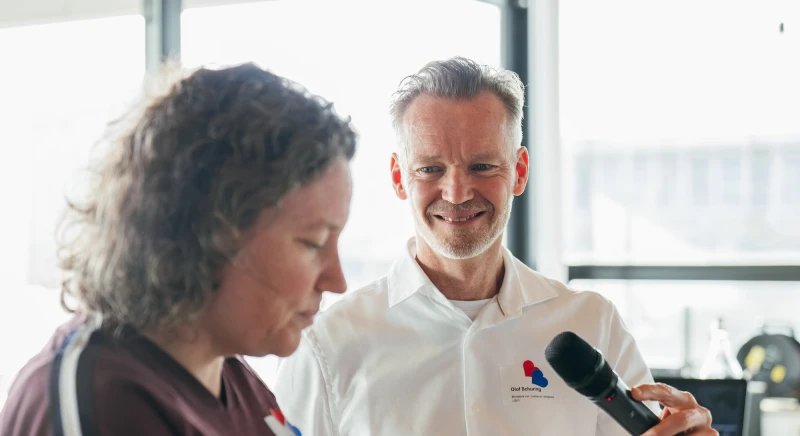
After the break, Linda Meijer-Wassenaar, coordinator of the Design Audit Studio at the Netherlands Court of Audit, and Olof Schuring, innovation adviser at the Ministry of Justice and Security, went on what could be described as a first date. Together with five other government organisations, they created the exhibition ‘De Staat van Samen’ (The State of Togetherness), exploring how the government of tomorrow can be designed.
Visitors to the exhibition were confronted with a range of dilemmas, such as: should the government of tomorrow be allowed to take greater risks if it means being able to innovate more quickly for citizens?
According to Schuring and Meijer-Wassenaar, the exhibition had already generated many new insights. Schuring also expressed his hope that the coalition of design thinkers would continue to grow. “Let’s bring more parties into this relationship,” he said. “Because this new way of thinking can truly be eye-opening.”
And then there are the ‘in-laws’
Jord de Kat Angelino of Studio Angelineau and Tessa Bloembergen of Studio Archites discussed the development of the Schakelmachine, a marble run that serves as a physical metaphor for systems thinking, which they are developing for the Ministry of Justice and Security. The Schakelmachine will form part of a new training programme for policymakers. During testing, the metaphor naturally encouraged participants to start discussing issues in terms of system dynamics models. “The Schakelmachine demonstrates, for example, that a solution that works well for you might actually create a whole range of problems for your neighbour.”
The ministry’s brief for the project was unusually open-ended, De Kat Angelino and Bloembergen explained. “Surprise me with something creative, physical and interactive. That was what we were asked to do. Normally, a client pays us to find something. The Ministry of Justice and Security wanted to pay us to explore together,” Bloembergen said.
But after accepting the commission, the two designers also found themselves meeting the ‘in-laws’, as they put it. Procurement procedures, managers, finance departments and numerous other stakeholders sometimes took up a considerable amount of time. Of the fourteen months spent working together, an estimated six were devoted to discussions about quotations and documentation, according to De Kat Angelino.
His advice to civil servants was to issue more open-ended briefs and spend more time exploring potential collaborations. And to designers, he offered this suggestion: “Form collectives and enter into polyamorous relationships.”
Rick van Vliet, coordinating policy officer at the Ministry of Justice and Security and an industrial designer, was the person who brought the collaboration together. “As a government, we are very good at linear thinking: there is a problem, so there must be a solution. That is easy to procure. And if the problem gets bigger, we tend to think we simply need to invest more money,” he explained after the presentation.
“But I think everyone in this room now understands that we need to move away from that way of thinking. We need to recognise that we are dealing with complex challenges that require many small interventions. And that is exactly why we need these kinds of polyamorous relationships, where we explore and work together to make progress.”
More adventure
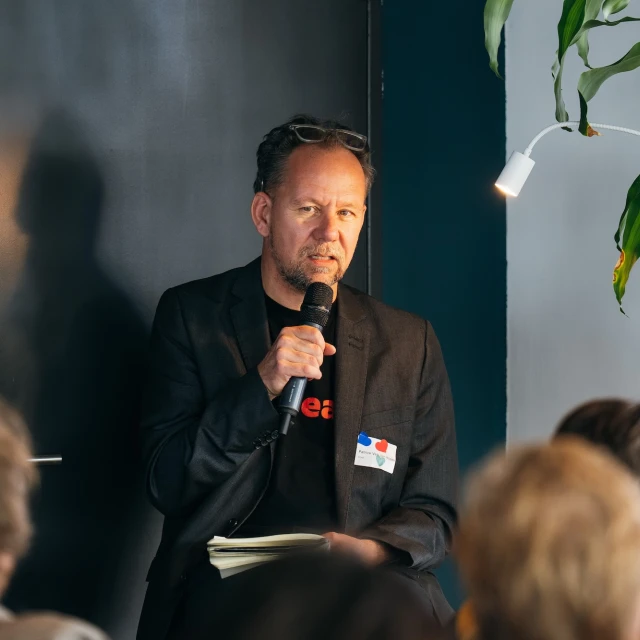
Patrick van der Hijden, who is developing the Public Design Coalition for a Resilient Society, then addressed the security sector in his declaration of love. “Are you focused on security or on resilience?” he asked. He, too, brought up the ‘p-word’: polyamory, a model representing different new forms of collaboration within the sector.
In the final declaration of love, social designer Jaap Warmenhoven expressed his frustration with the way the concept of safety is too often used as an excuse to avoid reflecting on one's own actions. “I long for more adventure,” Jaap said, pulling on a jumper with the word DANGER printed across it in capital letters. “Because safety comes from daring to take more risks.”
Many thanks to everyone who delivered a declaration of love during the event:
Tabo Goudswaard – Social designer
Rick van Vliet – Coordinating Policy Officer for Knowledge and Innovation at the Directorate-General for Sanctions and Protection, Ministry of Justice and Security, and industrial designer
Emy Bensdorp – Social designer at Reclassering Nederland (Dutch Probation Service)
Shruthi Venkat – Designer
Isis Peene and Ayah Yacoub – Social designers at We Are Social Rebels
Patrick van der Hijden – Initiator of the Public Design Coalition for a Resilient Society
Marjon van Gelderen – Strategic Creative Lead at the Dutch Police
Jaap Warmenhoven – Social designer
This report was written by Niels Guns. Photographs of the event were taken by Almicheal Fraay and can be viewed here.