DDF
· Report Creative economy symposium, by Niels Guns
Imagination is a factor of production
Creative economy symposium: sector needs more investment
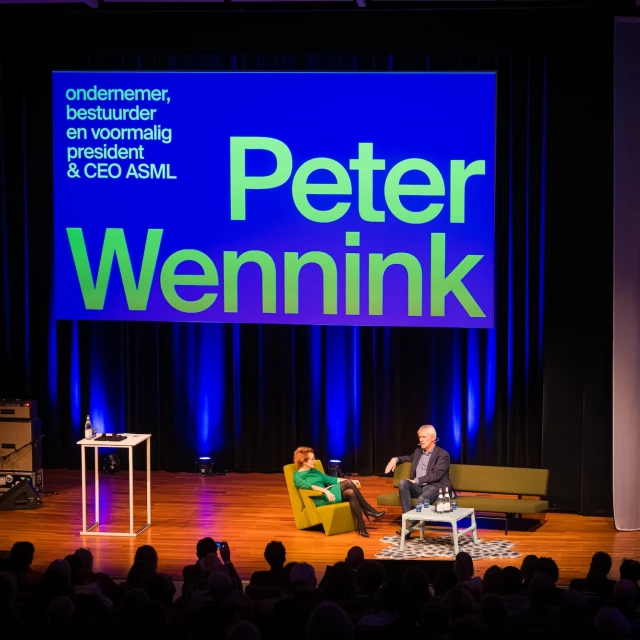
Art, culture and design are not a separate fifth pillar alongside the four growth areas identified in the Wennink Report, but an integral part of each of them. This was the argument put forward by Barbara Baarsma, Chief Economist at PwC and Professor at the University of Amsterdam, on Monday 19 October during the Creative Economy Symposium at Dutch Design Week. Peter Wennink, former CEO of ASML and author of the report, agreed: “ASML’s machines are also a product of creativity.”
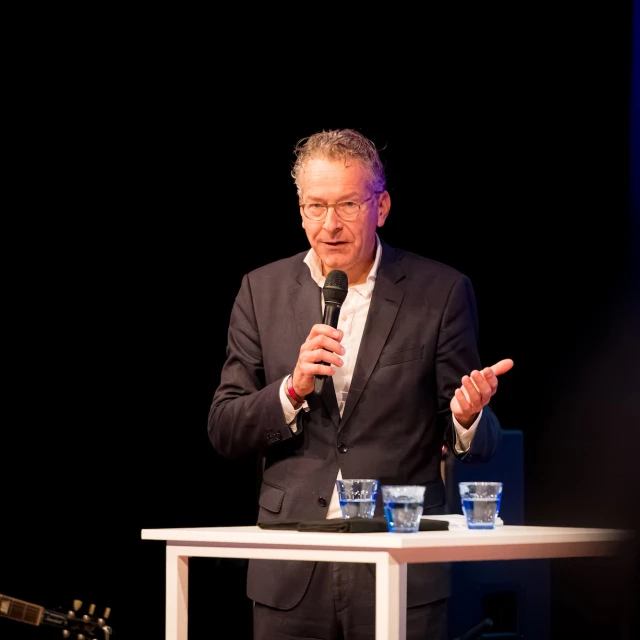
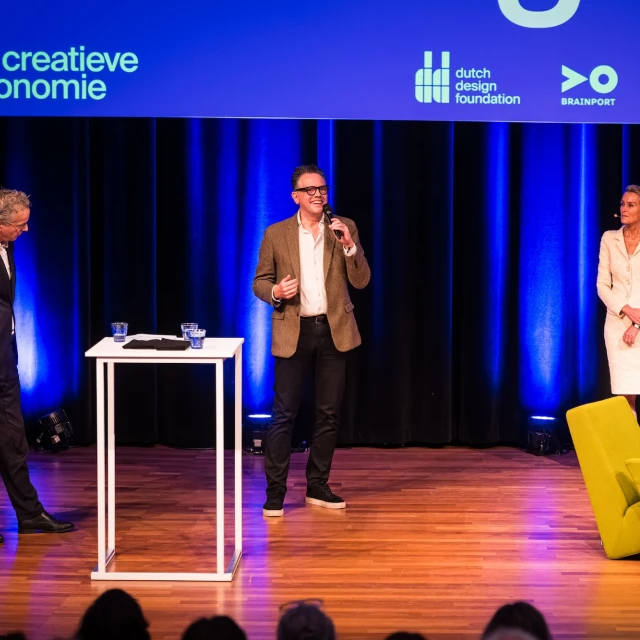
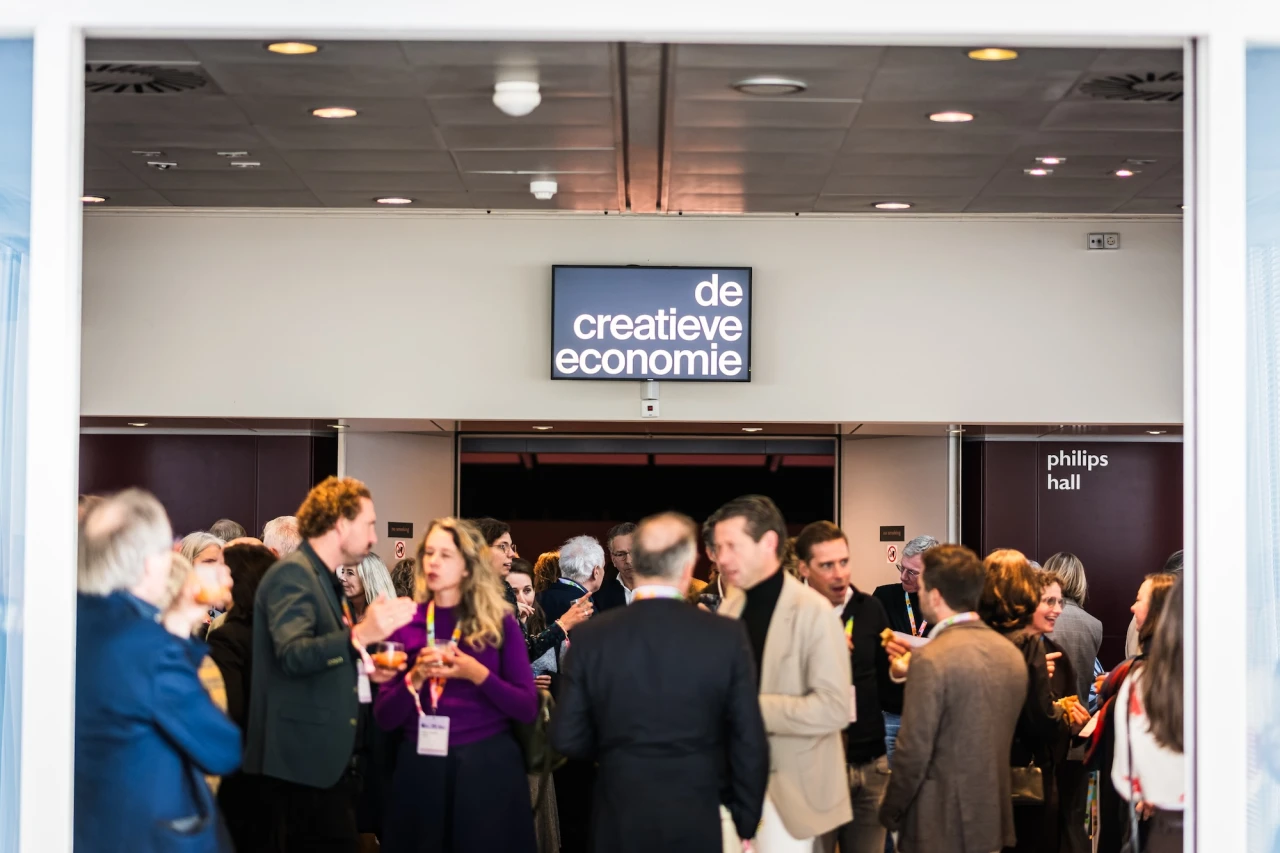
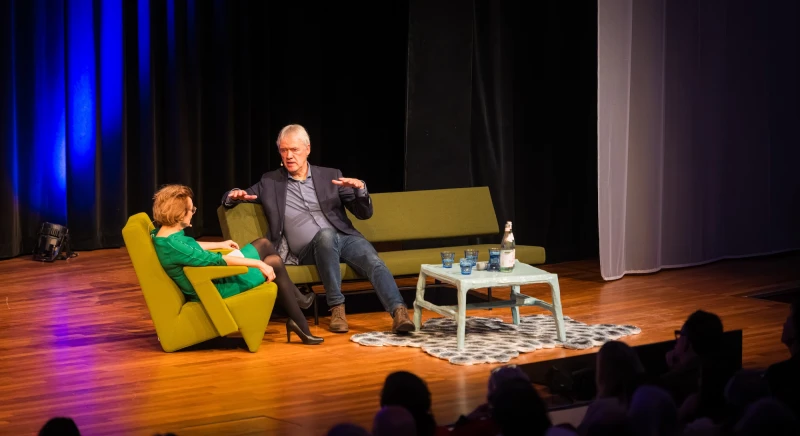
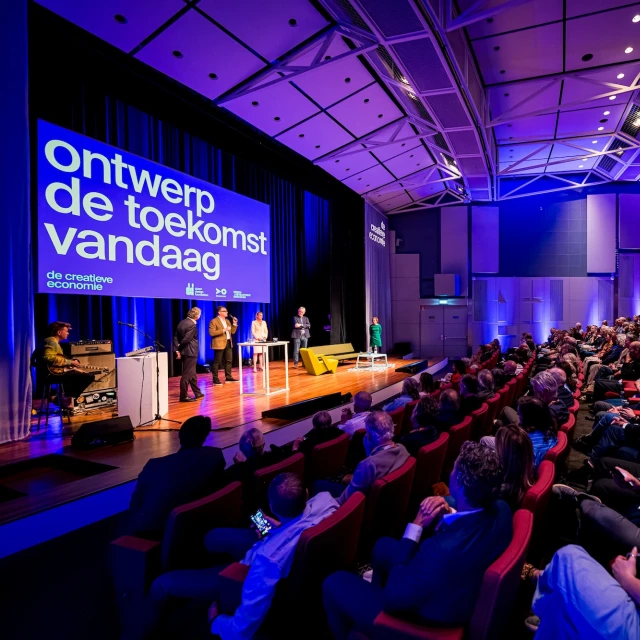
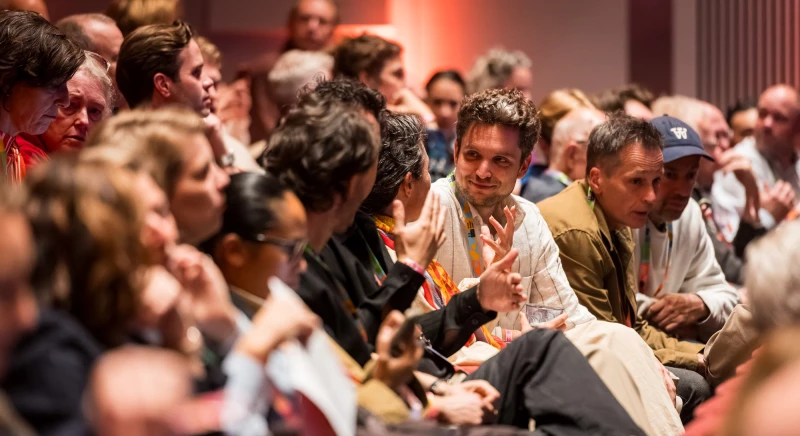
The symposium, held at the Evoluon in Eindhoven, was organised by Dutch Design Foundation (DDF), together with Brainport Development and Design Development Eindhoven. What can the creative and cultural sector contribute to economic growth in the Netherlands? This was one of the central questions explored in discussions between moderator Monique van Dusseldorp and various speakers.
The question arose following the publication of the Wennink Report. In the report, the former ASML CEO advised the Dutch government last year on the Netherlands’ future earning potential. He identified four key growth areas: digitalisation and AI, security, energy and climate, and life sciences. However, the creative industries were not mentioned anywhere in the report. According to Van Dusseldorp, the symposium was not intended to become an exercise in lamenting this omission, but rather an opportunity to explore what the creative sector actually has to offer.
Proud of its economic value
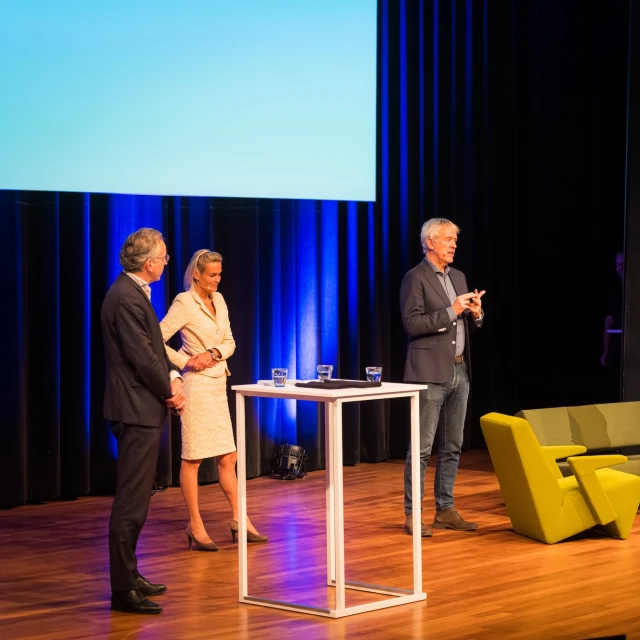
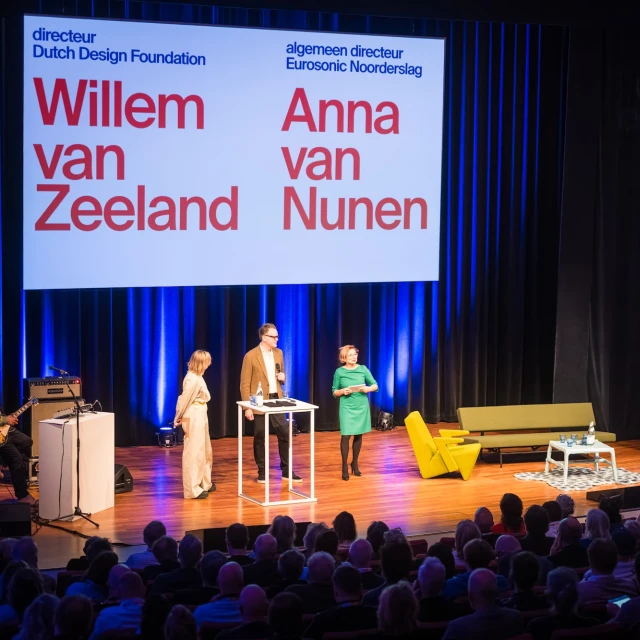
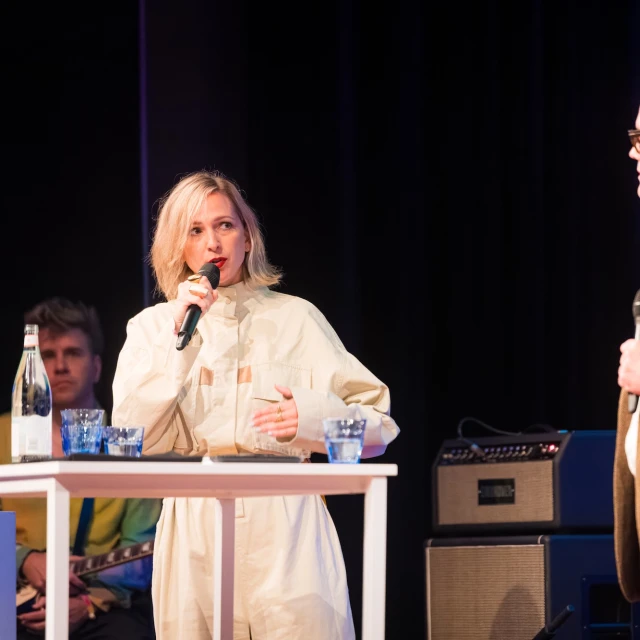
The sector clearly has a great deal to offer in economic terms, too. This was the argument put forward by Willem van Zeeland, who became Director of Dutch Design Foundation (DDF) earlier this year, and Anna van Nunen, Director of Eurosonic Noorderslag (ESNS), in an opinion piece published in the Dutch financial newspaper Het Financieele Dagblad ahead of the symposium. In the article, they called on the government, businesses and the sector itself to take the economic power of the creative industries more seriously.
Van Zeeland and Van Nunen reiterated this message on stage at the Evoluon. According to the DDF Director, the sector itself is too quick to downplay its economic significance. “It’s not all about money. That’s not why we do it, I often hear people say. And that’s absolutely true. But we don’t value nature for its financial worth either, yet it is recognised as an important factor of production. The creative sector could afford to be a little prouder of itself.”
Last January, Van Nunen commissioned a study into the economic impact of ESNS. The findings revealed that the festival generates €13.5 million for the city of Groningen and its immediate surroundings, twice the festival’s own budget. “That’s why we also want a meaningful seat at the table when it comes to economic policy.”
Between the cynic and the sentimentalist
Barbara Baarsma, Chief Economist at PwC and Professor at the University of Amsterdam, opened her talk with a reference to Oscar Wilde. In his play Lady Windermere’s Fan, the cynic is someone who knows the price of everything but the value of nothing. The sentimentalist, on the other hand, knows the value of everything but the price of nothing. “As an economist, I find myself somewhere in between,” Baarsma said. “I believe in putting a monetary value on things, but not in reducing everything to numbers.”
According to Baarsma, the creative sector’s direct economic contribution is relatively easy to measure. It accounts for approximately 420,000 jobs, around 4 per cent of total employment, and generates more than €27 billion in added value. The indirect effects are harder to quantify, but Baarsma argued that they are immensely important to society. As an example, she referred to the economic concept of option value. “I live in Amsterdam, close to all kinds of museums, cultural institutions and performance venues. I don’t visit them every day, but simply having them nearby holds enormous option value for me.”
Baarsma also discussed the so-called ‘unpriced effects’ of the creative sector. “Numerous scientific studies show that listening to music, reading a book, attending a theatre performance or admiring a beautiful piece of design can improve your mental and physical health. And that, in turn, helps you perform better.”
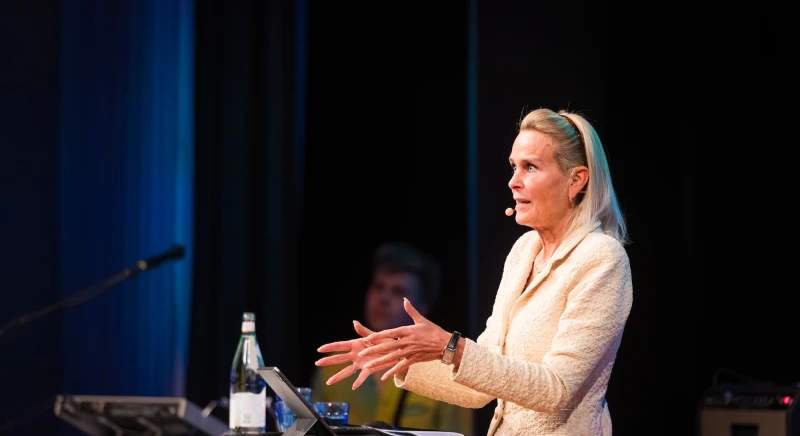
Baarsma’s main argument for recognising the value of the creative sector centred on the opportunities it offers for productivity growth. According to Baarsma, 80 per cent of Dutch economic growth over the past decade came from an increase in the labour supply, largely driven by the higher state pension age and labour migration. However, the economist argued that this effect has now run its course: the influx of highly skilled migrants has halved since 2022. As a result, the economy’s structural growth potential has fallen below 0.5 per cent, while the Wennink Report suggests that growth of around 2 per cent is needed to sustain future prosperity.
Baarsma therefore stressed the need to explore other ways of increasing productivity. According to her, productivity thrives in places where people, businesses and knowledge institutions are concentrated. Museums, theatres, festivals and creative hubs play an essential role in attracting talent to these areas. “Innovation doesn’t always happen in a laboratory, but often emerges from chance encounters,” Baarsma said.
The creative sector should therefore not be seen as a separate pillar, but as something woven into all four growth areas identified by Wennink. “Technology makes a solution possible. But design is ultimately what makes it usable. If the Netherlands wants to become more productive, sustainable and resilient, we need to invest. Not only in infrastructure and technology, but also in our ability to imagine that new future. Because imagination is a factor of production.”
‘A product of creativity’
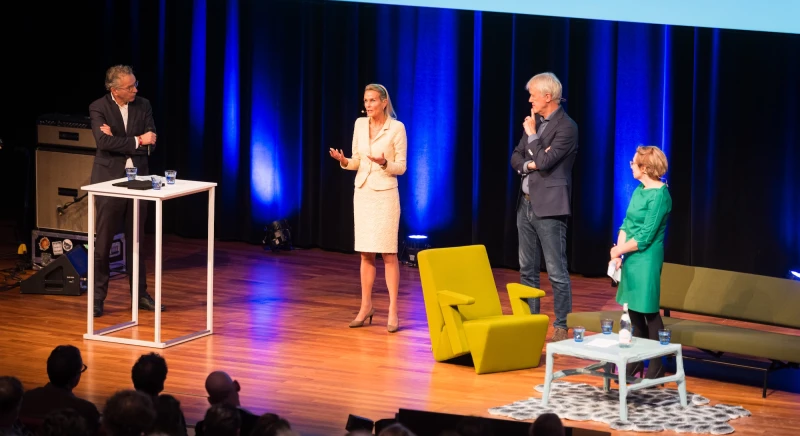
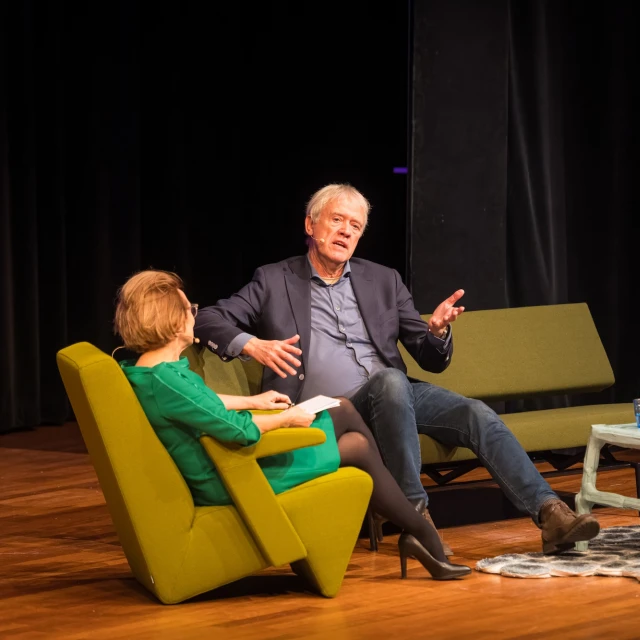
Peter Wennink then expressed his full agreement with Baarsma’s argument. The former CEO of Veldhoven-based chip equipment manufacturer ASML also described the company’s machines as “the result of a creative process”. Wennink recalled how scientists had once called ASML’s ambitions irresponsible during the early stages of developing its machines. “But the idea was: unless it has been conclusively proven scientifically that something is impossible, then it is possible.” According to Wennink, the Netherlands has lost this willingness to take risks “because things are going too well”.
Wennink argued that there is a lack of urgency in addressing the many challenges facing the Netherlands. “We have completely underestimated the sense of urgency and the speed at which the world is changing. The world has effectively deglobalised,” he said. “Democracy as we know it is under pressure, and more autocratic forms of government are emerging around the world. We can either sit on our island and watch the rest of the world change, develop solutions and create value. Or we can do exactly what Barbara just said: invest money.”
According to the author of the report, the Netherlands should aim not for strategic autonomy, but for strategic relevance. “If you don’t have a seat at the table, you’re probably on the menu,” he said. Wennink called for greater flexibility in existing rules and constraints to create more room for experimentation, making mistakes, and then acting and iterating quickly.
“I am concerned, but my message is ultimately one of optimism. Because creativity and the ability to collaborate, qualities that we in Europe inherently possess to a greater extent than in Asia and the United States, are precisely what we can build on to regain our relevance.”
The power of soft power
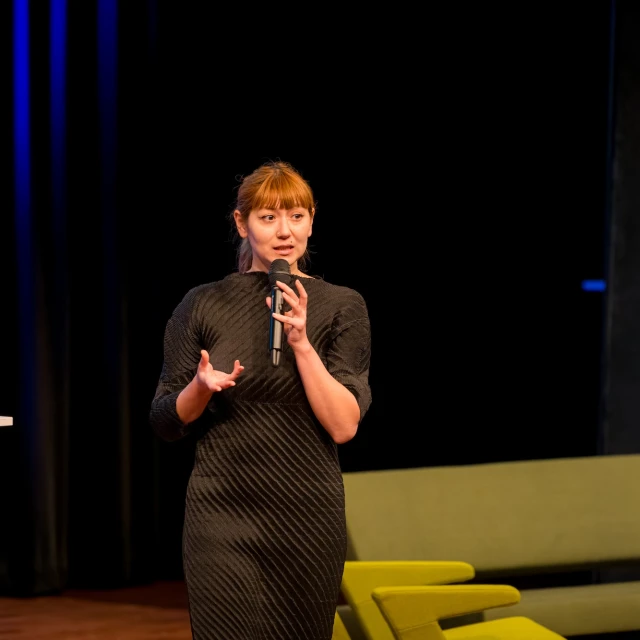
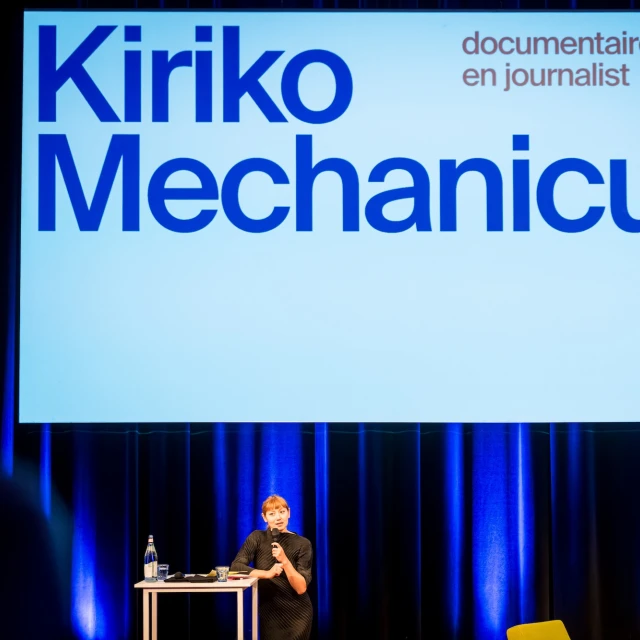
Following the discussion with Wennink, documentary filmmaker Kiriko Mechanicus explored in a spoken column what can happen when a country develops and implements a deliberate cultural strategy. She took 1993 as her starting point. That year, the economic advisory council of South Korean President Kim Young-sam drew his attention to the Hollywood film Jurassic Park. The film generated $1 billion in revenue, equivalent to the export value of 1.5 million Hyundai cars. This marked the beginning of a long-term, targeted investment in culture.
That investment is now paying off, with K-pop enjoying worldwide success and other Korean cultural phenomena spreading across the globe. “So dinosaurs are not only the evolutionary ancestors of birds,” Mechanicus said, “but also of the world of K-pop.”
‘No advisory body without a designer’
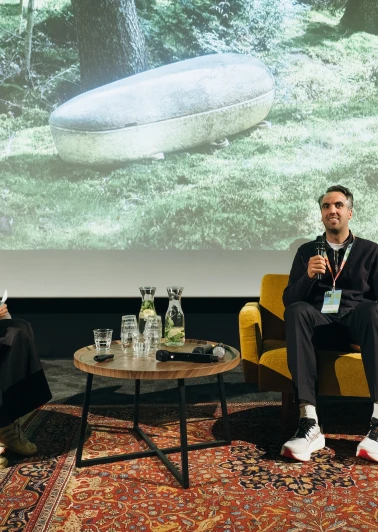
In a panel discussion following Mechanicus’s column, three representatives from different parts of the creative sector shared their perspectives. Jeroen Bartelse, Managing Director of TivoliVredenburg and Chair of Kunsten ’92, said he wanted to “turn the question around”. “Because what is the economy actually for? To enable us to dance. To enjoy ourselves. To connect with one another. In other words, the relationship between the economy and what gives life meaning actually runs the other way. Labour productivity serves a strong economy. And ultimately, that economy exists to enable us to live prosperous, enjoyable, fulfilling and meaningful lives.”
Bartelse said he wanted to “complete” the Wennink Report. In his view, it failed to address the question of under what conditions we should introduce technologies, for example. “My proposal is therefore this: make sure that no committee, advisory body or project is ever established again without a designer, artist or maker at the table.”
Anne Ligtenberg, designer and Programme Director of Design Development Eindhoven, highlighted the importance of design in addressing social challenges. She cited Het Bouwdepot, a project by designer Manon van Hoeckel, as an example. The pilot programme provides young people experiencing homelessness with an unconditional monthly income for a year, enabling them to build their own future.
“Normally, you can’t simply give money to vulnerable young people, but that is exactly what happened in this project. And it turned out to work,” Ligtenberg explained. “Designers build on the context, references and ideas of others, rather than focusing solely on the end user. They also pay attention to everyone they encounter along the way during the innovation process.”
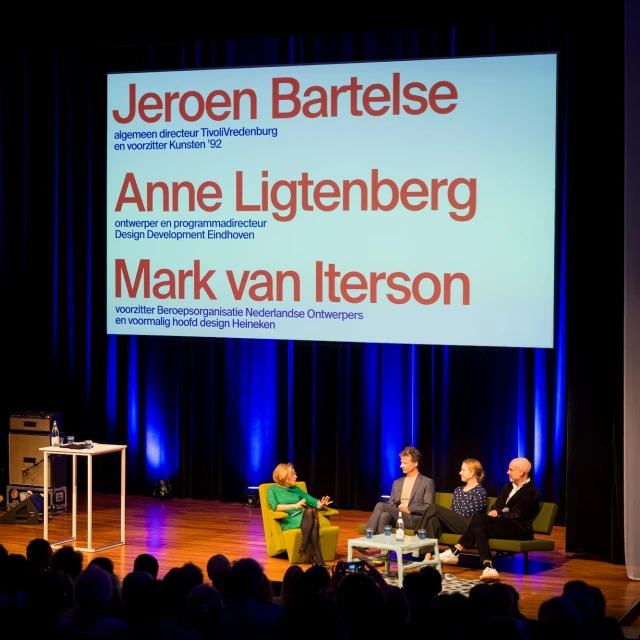
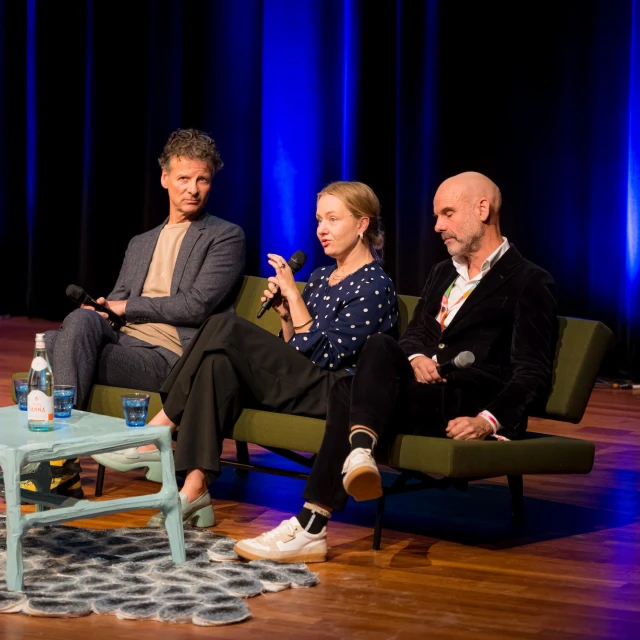
According to Ligtenberg, designers should be involved in this way on a much broader scale. She pointed to Máxima Medical Centre and Catharina Hospital, both of which now employ designers, as examples. She called on the technology and design sectors to collaborate more closely in this way. “Here in Eindhoven, technology and design exist in very close proximity. For a long time, we hoped that this proximity would naturally lead to strong connections. But I think the time has come to stop simply attending each other’s parties and start sending out invitations together, taking the initiative to make things happen.”
Mark van Iterson, Chair of the Association of Dutch Designers (BNO), also discussed the economic power of creativity during the panel discussion. Van Iterson previously spent 21 years as Design Director at Heineken. He explained how the beer brand’s revenue doubled over a ten-year period, partly thanks to good design. “I had a substantial budget, but it certainly didn’t run into the billions. Good design can have an enormous multiplier effect.”
Van Iterson warned against adopting an underdog mentality when discussing the economic importance of design and imagination. “Let’s think big. Design and creative thinking are Europe’s competitive advantage.”
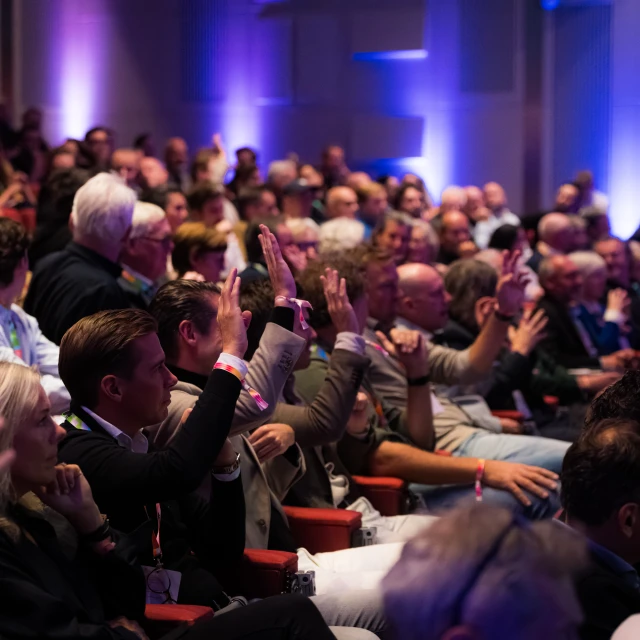
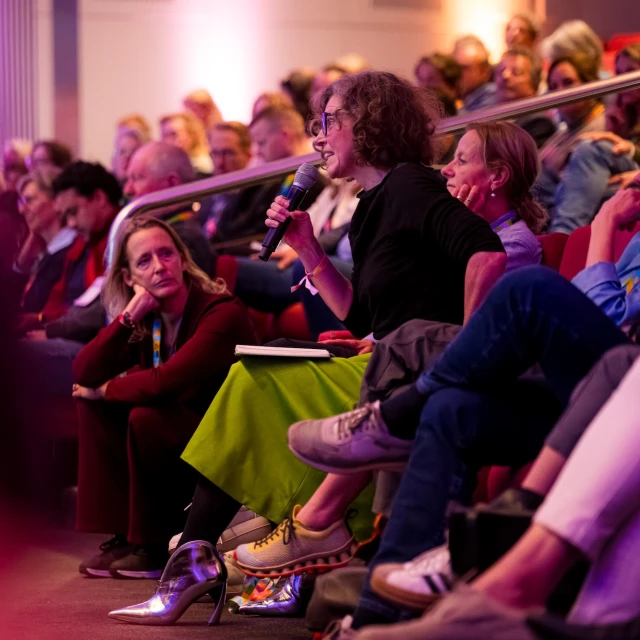
Making waiting lists visible
At the end of the symposium, Baarsma returned to the stage with a request for help from the creative sector. According to her, the Netherlands is becoming a country of waiting lists: for housing, assessments and mental healthcare treatment. “Waiting lists are fertile ground for polarisation.” She called on the creative sector to make these waiting lists visible in ways that would prompt politicians to take meaningful action.
Jeroen Dijsselbloem, Mayor of Eindhoven and Chair of Design Development Eindhoven, acknowledged in his closing remarks that the creative sector in his city faces a shortage of space, talent and investment. According to Dijsselbloem, Eindhoven must remain a city where people have the opportunity to develop and fulfil their potential. “We certainly won’t be able to achieve that without the creative sector.”
He explained that the city is therefore working to create more workshops and spaces for makers. “That’s why we established Design Development Eindhoven. Because things like this don’t happen on their own.”
Van Zeeland then concluded the symposium with a clear message to policymakers in The Hague. “How the cultural sector ever came to be portrayed as a drain on public subsidies remains a mystery to me. After all, subsidies for technology and agriculture are far higher,” he said. “We make a substantial contribution to the economy. The sector therefore deserves significantly greater investment.”