Upcycled Turbines
How a decommissioned wind farm became a goldmine of raw materials
This Co/Lab has been completed
After around 30 years of operation, wind turbines are ready for a second life. But what happens to all their materials and components when a wind farm is decommissioned? Vattenfall was looking for new ways to retain that value. Dutch Design Foundation helped the energy company formulate the design challenge and connected it with four design studios, each approaching reuse from a different perspective.
How can wind turbine components be reused as effectively as possible once the turbines are decommissioned? The four design studios immersed themselves in the world of wind turbines, analysed the properties of different components and spoke with thought leaders, industry experts, researchers and other designers. Drawing on this knowledge, each studio developed its own response to the challenge.
Designers from different disciplines were invited to explore the challenge. Working across industrial design, systems design and architecture, cepezed, Superuse Studios, Interactivist and Studio Carbon developed different concepts for reusing materials and components from decommissioned wind turbines
The four design studios each developed a concept for reusing components from decommissioned wind turbines, approaching the challenge from a different perspective.
Floating Platforms
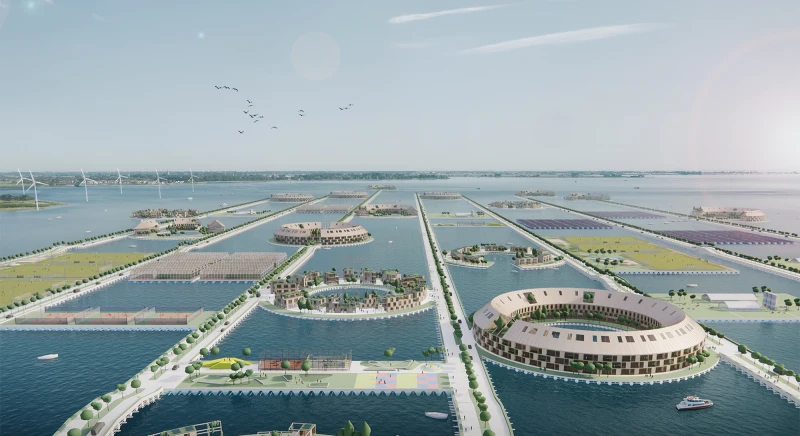
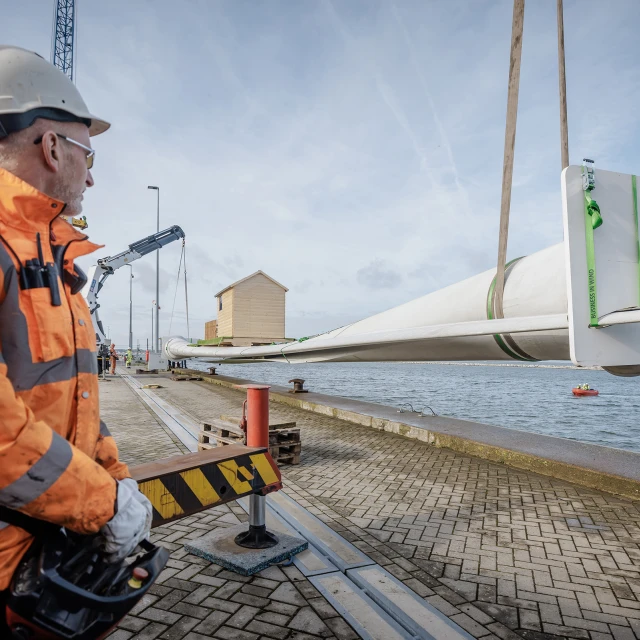
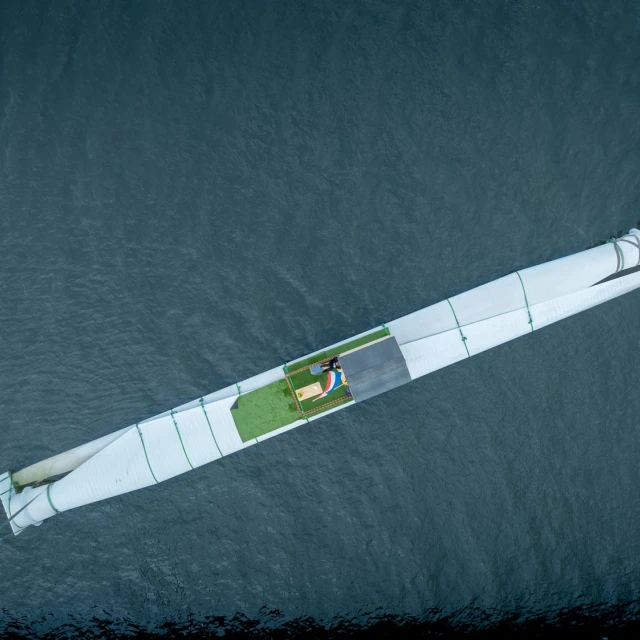
cepezed explored how turbine blades could be reused while keeping them as intact as possible. By using their optimised weight and hollow structure as floating elements, the studio proposed floating platforms that could contribute to challenges such as housing shortages and rising sea levels.
Nestle
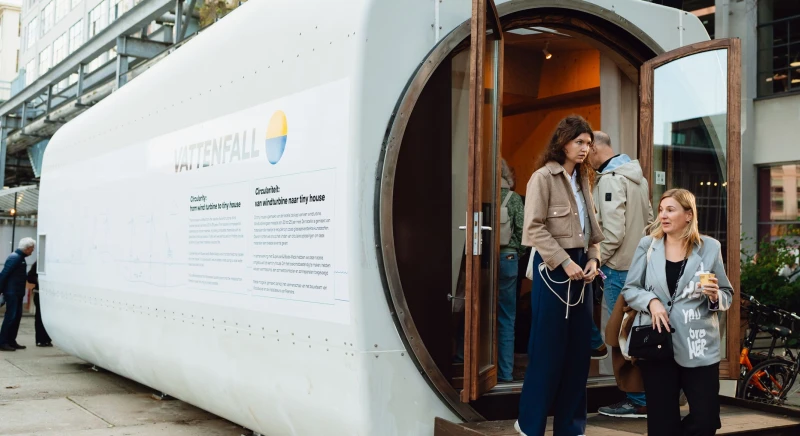
Superuse Studios developed Nestle, transforming a Vestas V80 nacelle into a tiny house of approximately 35 m². This gave the nacelle a second life as, for example, an office, exhibition space or holiday accommodation.
Turbine Times
Interactivist developed Turbine Times, which looked at wind turbines not only as a source of green energy, but also as part of our cultural and emotional landscape. Through data paintings, the life cycles of turbines were made visible.
Wind Forests
Studio Carbon explored turbine decommissioning within the wider energy ecosystem. This resulted in a systems map, a vision for 2050 featuring Wind Forests, and a backcasting toolkit to help Vattenfall work towards that future.
The availability of technical information proved to be an important point of attention throughout the process. Data, dimensions and manuals were sometimes provided late or not at all, even though this information was necessary to develop the concepts further. An important lesson was therefore to make information available earlier and to continue creating space for co-creation between the client and the designers.
“What I’m really pleased about is that we did not set up this Co/Lab as a competition. Instead, we created a small community of designers.”
That collaboration proved to be a valuable part of the Co/Lab. Rather than working competitively, the studios formed a small community of designers, allowing ideas and insights to cross-pollinate between the different practices. This enabled them to approach the same challenge from different perspectives and collectively explore new possibilities for wind turbine materials and components.
- Commissioner
- Vattenfall
- Designers
- cepezed, Interactivist, Superuse Studios, Studio Carbon
- Lab manager
- Justine Kontou
- Domain
- Environment
- Interesting for
- Designers, Entrepreneurs
Questions? Get in touch with lab manager Justine























































Sign up for the newsletter
Be the first to receive invitations to events and programming, and meet new designers.